
Comparing Casino Game Types Before You Choose a Lobby

When a casino catalogue contains thousands of titles, the main challenge is not finding something to play but narrowing the choice intelligently. A useful spinsy casino review should therefore examine how the lobby is organised, which game families are represented and what each format demands from the player. This guide focuses on discovery rather than promotions or account administration, helping Canadian adults compare slots, instant games, table games, jackpots and live dealer options without treating variety as proof of quality.
Start with the game family, not the title
The quickest way to make a large lobby manageable is to decide which type of experience you want before searching for an individual title. Slots suit players who prefer automated rounds, changing themes and many different bonus mechanics. Instant games are usually built around shorter, simpler interactions, while table games provide more recognisable rules and a stronger connection to traditional casino formats. Jackpot sections add a prize-pool element, although the specific conditions and contribution structures need to be checked within each game.
Table games can be divided further into roulette, blackjack, baccarat, dice and poker-related formats. That distinction matters because the pace, decision-making and familiarity required can differ considerably. Roulette generally centres on selecting outcomes, blackjack involves decisions during a hand, and baccarat offers a comparatively streamlined betting structure. Poker-labelled games may not all follow the same rules, so the title’s information panel should be read rather than relying on the category name alone.
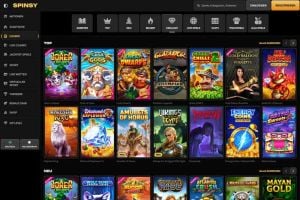
A practical first pass is to choose one broad family, then filter by popularity, new releases, provider or live availability. The lobby also presents sections such as Top, New, Popular, Exclusive, Live Games, Instant Games, Slots, Table Games and jackpots. These labels are useful navigation aids, not independent measures of value. A popular game may simply be widely promoted, while a new game may have limited history. Use the categories to reduce browsing time, then examine the rules of the individual title.
How do slots and instant games differ?
Slots are usually the broadest category, covering simple three-reel designs, feature-heavy video slots, progressive-style jackpots and games with expanding reels or bonus rounds. The visual theme is only one part of the comparison. Payline structure, ways to win, volatility, maximum stake, bonus triggers and the range of possible outcomes can all affect how a session feels. Two titles with similar artwork may have completely different pacing and risk characteristics.
Instant games tend to be more direct. They may involve a quick prediction, a multiplier, a crash-style sequence, a scratch format or another short round with limited setup. Their appeal is often convenience: the player can understand the basic interaction quickly and move between rounds without navigating a complex reel layout. That simplicity should not be confused with lower risk. A faster round can make it easier to place decisions repeatedly, so the format deserves the same deliberate approach as a conventional slot.
Demo play, where available, is useful for learning the controls and seeing how a title is structured. It cannot establish how a real-money session will perform, and a short sample cannot confirm a game’s long-term return, volatility or frequency of features. Before choosing a slot or instant game, open its help or information screen and look for the rules, eligible symbols, bonus conditions and displayed theoretical figures. If the information is unclear, choose another title rather than guessing.
When does live casino add something useful?
Live casino is best understood as a different presentation format, not automatically a better version of a table game. A live dealer table uses streamed interaction and a human presenter, which can make roulette, blackjack or baccarat feel closer to a physical venue. The trade-off is that the experience may be less compact than an automated game, and table availability, pace and betting windows can vary by session.
The live categories described in the Canadian lobby include roulette, blackjack, baccarat and dice, as well as poker, international tables and game-show formats. Game shows such as Crazy Time, Mega Ball and Deal or No Deal place entertainment and large visual features at the centre of the format. They may appeal to someone seeking a social broadcast style, while a player who wants quiet, rapid rounds may prefer a standard digital table or slot.
Comparing live options requires more than recognising the dealer or studio name. Check the table limits, rules, side bets, payout information and whether the game uses a standard or variant ruleset. Side bets can change the way a familiar game behaves and may carry different probabilities from the main wager. A live interface can also create a stronger sense of occasion, so decide in advance how long to watch and how much to risk rather than letting the presentation determine the session.
Use provider filters to narrow a crowded catalogue
Provider filters are helpful when a player already knows the style of a studio they enjoy. The catalogue lists names including Hacksaw Gaming, Amusnet, BGaming, Booongo, Spinomenal, Yggdrasil, Amatic, Oryx, Evoplay, CT Interactive, Playson, EGT Digital, OneTouch, Tom Horn, Platipus and AvatarUX. Other listed providers include Playnetic, Gamzix, Galaxsys, Imagine Live, SA Gaming, Lucky Streak, Aviatrix, SpadeGaming, Fugaso and PatePlay.
A provider is a useful starting point, but it is not a guarantee that every title from that studio will suit the same player. Studios may publish different formats, themes and volatility profiles, and a familiar logo does not replace reading the game rules. Search by provider after selecting a category, then compare two or three titles using the same criteria: round speed, feature complexity, displayed return information, stake range and whether demo play is offered.
Provider names can also help identify whether you are browsing slots, live tables or other formats, but catalogue labels may change over time. Some titles associated with wider listings include Sugar Rush 1000, Big Bass Bonanza, Starlight Princess and Wanted Dead or a Wild; their presence or availability should be confirmed in the current lobby rather than assumed. Treat examples as search prompts, not recommendations. The strongest filter is the one that matches your preferred pace and rules, not the most recognisable brand.
Build a short list before opening a game
Once you have chosen a category, create a small comparison set instead of opening every promising title. Three to five games are enough for a first review. Include at least one familiar format, one new or less complex option and, if relevant, one live table. This approach makes it easier to notice differences in instructions, interface design, feature frequency and pace without allowing endless scrolling to become the main activity.
For each candidate, check the information screen before playing. Look for the minimum and maximum stake, paytable, winning combinations, bonus-game rules, special symbols and any stated return or volatility information. Confirm whether the displayed currency and stake controls match your intention. If a game includes side bets, autoplay-style functions or rapid-repeat controls, understand how they work before using them. Never treat a promotional label such as “exclusive” or “trending” as evidence that a title is more suitable.
Finally, separate entertainment preference from financial expectation. A game with striking graphics may be enjoyable, but no title can promise a profit, and short sessions do not reveal long-term results. Set a fixed time and spending boundary before browsing, particularly when comparing fast formats with slower table games. If the lobby does not provide enough information to make a clear comparison, pause and check the operator’s stated game details or choose a title with more transparent rules.
Questions Canadian players often ask about game discovery
Can demo play tell me which game is most likely to win?
No. Demo play can show the controls, layout and general feature structure, but a short sample cannot predict future results or prove a game’s long-term return. Use it to assess whether the format is understandable and enjoyable, then review the published rules and figures before making any real-money decision.
Is a live dealer game always more realistic than a digital table?
Not necessarily. Live dealer games add streamed presentation and human interaction, while digital tables may offer faster rounds and simpler navigation. Realism is a preference rather than a guarantee of better value. Compare the rules, table limits, side bets, pace and interface to determine which format fits your intended session.
What is the best filter for a large casino lobby?
Start with the game family that matches your preferred pace, then narrow by provider, popularity, new releases or live availability. After that, compare individual titles using rules, stake range, feature complexity and displayed information. A filter should reduce searching; it should not replace reading the game’s own instructions.